Image



Next step in transplantation expands donor pool and is easier on patients
A common occurrence in advanced colorectal cancer is that it spreads to the liver. When surgery is not possible, standard treatment is chemotherapy. But for certain patients, a liver transplant is highly preferred. Statistically, the five-year survival rate is between 60-80% for transplants vs. 10% for chemotherapy. The obstacle to transplant treatment is that demand for liver grafts – portions of liver tissue or the entire healthy liver – exceeds the supply.
It’s in this environment that graft-sparing strategies for living liver donation have been developed. These approaches expand access without increasing the need for whole deceased-donor grafts.
In general, living donor transplantation has more benefits for patients. It is considered superior to a deceased-donor liver transplant in areas such as quality of grafts, reduced wait times, quicker time-to-transplantation and more comprehensive donor screenings.
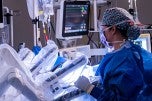
One graft-sparing strategy is resection and partial liver transplantation with delayed total hepatectomy (RAPID). The very first RAPID surgery in the United States was recently performed at Jefferson Health’s nationally recognized Transplant Institute in Philadelphia by its skilled transplant team.
“RAPID is a two-step approach that starts with transplanting a small portion of liver from a living donor into the recipient,” says Dr. Ashesh Shah, Director, Division of Transplantation, and Surgical Director, Liver Transplant Program, Jefferson Health. “Once the liver portion has grown enough to function on its own, which can take months, weeks or days, the remaining diseased liver containing the cancer is removed in a planned second operation.”
The liver is the only organ that can regenerate, so when transplanted, the partial section will grow into a normal-size liver for both donor and recipient. Those who decide to donate while living have the same life expectancy rate and quality of life as they had prior to the operation.
“RAPID’s staged process makes it possible to use a smaller graft and reduces reliance on deceased‑donor organs,” says hepatobiliary and transplant surgeon Dr. Adam Bodzin. “Even if a donor comes forward, many times they are not anatomically suited for a whole-liver graft. By using a smaller portion of the liver, we may still be able to use that donor. In this way, RAPID increases the live donor pool.”
The pioneering RAPID donor and recipient surgeries at Jefferson were completed simultaneously. The first (transplant) operation took almost 10 hours and the second (cancer removal) took four hours.
New approaches like RAPID that increase transplant options are essential now that colon cancer is no longer restricted to “elders.” It has, in fact, become the leading cause of cancer-related deaths among Americans under 50, with about one in five new diagnoses now occurring in people under 55.
This is why, the Jefferson team says, medicine is branching out from chemotherapy – and beyond deceased donors – in instances where colorectal cancer has spread to the liver.
“With standard chemotherapy treatment among patients under 50 with metastatic colorectal cancer, only one in ten of them will survive five more years,” Dr. Shah says. “With transplant and with RAPID, survival changes dramatically.”
He says, while the easy path may be to follow the standard, the job of the experts at Jefferson’s Transplant Institute is to find real solutions that help people.
“It’s a mark of our program to have an interest in being the vanguard of transplantation,” Dr. Bodzin says. “We take a leap of faith to perform innovative operations like RAPID, but it’s the innovations that create more opportunities for patients.”