Image



How to build a healthier lifestyle in a year on The Healthiest You podcast: Episode 48
Which areas of your health are you ready to change this year? From better sleep to regular exercise to eating nourishing meals, anything is possible when you know your “why.”
If you want to hear about a program that can help you on your journey to become a healthier you, you’ll want to listen to the latest episode of The Healthiest You podcast. In Part One of our podcast series, you’ll hear from Medical Director of the Jefferson Lifestyle Program Courtney Pinkham, MD, with Lehigh Valley Health Network (LVHN), part of Jefferson Health.

What are some barriers to forming habits? How can lifestyle medicine improve your health? What are practical ways to build better habits? Which chronic diseases can be addressed with lifestyle changes? What is the Jefferson Lifestyle Program and how can I sign up? We answer these questions and more on The Healthiest You podcast this month.
Or download it from one of the platforms below.
Check the “Healthy You” box to get the latest podcast episodes, news, health tips and stories in your inbox weekly.
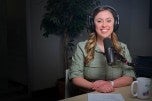
The Healthiest You podcast is hosted by Amanda Newman with LVHN. In each episode, she interviews clinicians and experts across LVHN to learn practical health tips for everyday life – to empower you to be the healthiest you. While you’re balancing all the responsibilities – work, mom life (kids, dogs, cats and chickens included), family, friends and the never-ending to-do list – you deserve to take a moment of time to focus on your health.

The Healthiest You is available on the podcast apps below. Just search “The Healthiest You” and hit subscribe, so you never miss an episode.
Amanda Newman (00:00):
How can lifestyle medicine improve your health? What are practical ways to build better habits? Is the Jefferson Lifestyle Program right for you? All that and more on this episode of The Healthiest You.
(00:11):
Some studies say it can take as little as 18 days or nearly nine months to form a new habit, but the most important step is to begin. Today, we're talking about the power of habits and a program that can help you on your journey to better health.
(00:27):
Welcome back to another episode of The Healthiest You podcast, where we focus on women's health and wellness. I'm your host, Amanda Newman. Whether you're on your way to work or enjoying a cup of coffee, take this time to focus on your health. Here to talk about building healthy habits and the Jefferson Lifestyle Program is medical director of the Jefferson Lifestyle Program, internal medicine physician and pediatrician Dr. Courtney Pinkham, with Lehigh Valley Health Network, part of Jefferson Health.
(00:56):
Dr. Pinkham, welcome to the show.
Courtney Pinkham, MD (00:58):
Well, hello. Thank you for having me.
Amanda Newman (01:00):
So we know that our daily habits have a significant impact on our overall health. What would you say are the most common habits your patients are trying to break?
Courtney Pinkham, MD (01:10):
Well, I think that instead of thinking about what habits people are trying to break, it's more what habits are people trying to form. I think that becomes really important. Certainly, we can talk about smoking cessation, decreased alcohol consumption, but so much more. I think it's people trying to find time or trying to figure out what's my approach to nutritionally dense foods. What's my approach to regularly moving my body? How do I get the sleep that I know I need when I also have all of these responsibilities and also need some time to feel like a person?
Amanda Newman (01:44):
That's a really great perspective shift. I like that a lot.
Courtney Pinkham, MD (01:48):
Yeah. I think it's really important. And so often when I'm talking with patients, I say, "Listen, I'm not an expert in what your life looks like. I'm an expert in medicine." So let's figure out how we set up your life because we know that people who are exercising on a regular basis, it's not that they wake up and they think, today, I am going to run four miles. It's not that. It's that in the morning they wake up, they put on their shoes and they run. That's just what they do and they feel weird when they don't do it. And I often will make the joke, I never am super pumped to do my laundry. I'm never like, "Yeah! My kids have all these dirty clothes. Let me wash them today." No, it just has to get done. And there's natural pockets in my week where it makes the most sense to do it.
(02:31):
And so similarly, trying to figure out what are those pockets where I can be mindful about my nutrition, how do I set myself up for better sleep, physical activity? How do I ensure I'm having positive social connections in my life? All those things are a lot to try to take on at once, but we can try to do one at a time or try to find something that works for each individual person.
Amanda Newman (02:55):
Right. And starting small is really helpful. For me, if I want to go for a walk in the morning, I have to set out my gym clothes or it's not going to happen. It's just that added little step.
Courtney Pinkham, MD (03:05):
Yeah. And being mindful of what your goal is at the end of it. So if we're looking at building a mindfulness or some type of meditation practice, for example. People will say, "I'm going to sit down and meditate for 10 minutes" – and they've never meditated before. And they go to sit down and they are easily distracted because, of course, we all are. We're humans and we are in a very stimulating environment that we all live in today. And so then they just spend the whole time either saying, "What do I have to do later today? When does this build do? What did I do last week? What about this conversation?" And then they think, "Well, I can't meditate. I can't sit still that long." To which I say, "Well, of course not. You've never practiced that before. That's silly. Why would you think you could do that?
(03:53):
What if we try just to notice the feeling of the wind on our face for 30 seconds? Can you do that every day? Before you get out of your car to run to work or to pick up your kids, or can you just be intentional about feeling what it feels like in your body to breathe out three times? Can we start these really small, but very accomplishable habits? And actually I'm reading a book right now and they say ridiculously unambitious goals. What is the most ridiculously unambitious way for me to eat more vegetables? What is the most ridiculously unambitious way for me to move my body more? And start there and then build from that perspective.
Amanda Newman (04:40):
That's a great tip.
Courtney Pinkham, MD (04:42):
I know. I wish I came up with it. It's not mine.
Amanda Newman (04:45):
Well, thanks for sharing it, on the author's behalf. Well, many of us want to establish better routines, but sometimes it's hard to make those changes stick. What are some barriers to forming habits?
Courtney Pinkham, MD (04:59):
So many. I live with three of them – children – because every time they're in a new developmental skill, that means that what I am responsible for changes. And there've been so many seasons of shifts. And so if it was just me in my own home, left to my own devices, I know when I can exercise. But sometimes I think, OK, I can wake up and exercise, and then someone wet the bed or someone had a bad dream. And now instead of having the amount of sleep I thought I was going to get, I'm getting way less. And then I'm renegotiating. And so I think there's so many things that can get in the way of us building these healthy habits. And it becomes important to then think about what are we focusing on now? For example, I cannot go to the gym three days a week for an hour at a time.
(05:52):
I would love that. I love to exercise. I love to be physically active. I am someone who I know feels good when I do that. That's not available to me. What is available to me is to say, I'm going to do something physically active five out of every seven days. And at the end of the month, if I do that – and this is real, this is what's happening at the end of this month – I'm going to get myself a new milk frother because someone broke my previous milk frother. And so sometimes what that looks like very practically is, "Oh shoot, it's Tuesday. I didn't do anything Sunday and Monday. So if I'm going to do five out of seven days, I'm going to go downstairs and row for five minutes." And it's just five minutes, but my goal is five out of every seven days do something physical and then build from there.
(06:31):
So that's one way that we think about building habits is to just be very habit stacking or habit pairing to say, "I really enjoy listening to this podcast, or I really enjoy watching this television show. And so I am going to make it a point that I am going to meal prep for the week when I watch this show, or I am going to do something physically active when I watch this show." And so taking something that is already kind of a habit, kind of a routine and adding to that something that also benefits you in a different way in addition to getting joy out of consuming that media source.
OK. Kind of like if you're brushing your teeth and flossing your teeth, you could also be listening to a podcast, doing two things at the same time
Courtney Pinkham, MD (07:16):
And doing something that you enjoy doing. I had a patient once who said, "I want to work on my balance. And so every time I let the dog out, I'm going to stand on one foot and I'm going to switch back and forth."
Amanda Newman (07:27):
That's a great idea.
Courtney Pinkham, MD (07:28):
I know. I didn't come up with something so simple. So just being mindful of what are the moments that you do have in your day where you can just make these little, little changes that can serve your greater goal.
Amanda Newman (07:43):
So you touched on a few different barriers to building habits. So if any of those resonate with our listeners, what are some ways to start making meaningful changes today without feeling overwhelmed?
Courtney Pinkham, MD (07:57):
I think the first thing is to think of your why. Deciding for yourself, I'm going to give myself 10 minutes on this day, on this time, and I'm just going to really focus on why I think it's worth it to make this change. And I think that many times people will come into my office and they'll talk with me about their weight. And we don't actually have a ton of control over the amount of space we take up on this planet. We can control how we sleep. We can control how we feel to a certain extent. We can control how we move our body. We can control how we fuel our body. We can take control of how we care for our body. But at the end of the day, there's a bunch of complex interactions between our environment. We all live in an incredibly obesogenic environment and our genetic background. You don't have a lot of control over your space, but we can think about, well, what does my life look like?
(08:56):
Why do I think I want to be in a different size? Why do I want to think I want to weigh less? And I think for some people it's, "I want to be able to get on the floor with my grandkids." I had a patient once who really her thing was, "I have a young kid and I can't chase after them, and I just want to be able to play with my child." And when we think about that why first, I think that then other things become so much more achievable. So finding your why and organizing that from the beginning. What is my why? What does my life look like if I invest in my health? Am I modeling this for the people around me? Am I better able to contribute to my community? Am I thinking about the fact that when I'm in my 70s and 80s, I want to be able to be independent.
(09:44):
Whatever your why is, start there. And then decide what the most ridiculously unambitious thing that you can do today to get you just a little bit closer to that ultimate goal.
Amanda Newman (10:00):
I love that. It's making me think about my own personal goal for this month, which is to walk 10,000 steps each day. And earlier you had mentioned about finding those little pockets of time, and that's what I do. So I wake up earlier in the morning, do a walk over lunch, and then at the end of the day, if it rolls around and we've had dinner and I'm like, "Oh, I still need to get those last 2,000 steps," and I hop on my treadmill and I do it. And it's because I want to sleep better and I want to feel better, and I want to be able to feel good when I'm out hiking and doing the activities that I want to be doing with my husband and family. And that's so important to have that as literally the guiding light.
Courtney Pinkham, MD (10:40):
Yeah, it makes such a big difference to know why you're doing the things that you're doing. And we started this talking about habits, and I think it's worth reflecting on the fact that many of us have habits that we sort of fell into, and they're not intentional. And thinking about, oh, well, if every day I go to the vending machine after lunch and I get a snack. Did you choose that habit intentionally or were you tired from the night before and you were kind of having that late afternoon slump? And so you just became, oh, now is the time that I get up from my desk and I do this walk. You fell into that habit, and now it's a habit and now you're not even thinking about it. Well, what would that habit look like if it was more consistent with your why? Would you be just seeing the sun for those 10 minutes?
(11:28):
Would you be choosing an apple instead, which in some ways can be a little bit better for our energy level than most things that are available in most vending machines. Yeah, I think just being mindful of those things is something a lot of us don't – we've never taken the time to do and we've never really had the time to do. And so to start by being intentional about that is so valuable.
Amanda Newman (11:51):
That's how I feel about social media. Because I feel like in the evening I used to just scroll and I was like, "Oh, well, I'm unwinding." No I'm not. I'm stressing myself out more.
Courtney Pinkham, MD (12:00):
All the evils of the world.
Amanda Newman (12:01):
I literally deleted it off my phone, and I feel amazing. And I am more present and I don't have the want to go on it as much because it's just not there.
Courtney Pinkham, MD (12:11):
It's not the habit.
Amanda Newman (12:12):
I have to re-download it if I want to access it.
Courtney Pinkham, MD (12:13):
You have to do something. Which is another really good point about habits in general, is making the choice that's consistent with your goals as easy as possible. And you brought up a really good example. If I want to get up and exercise, let me have that outfit out the night before so I don't have to decide what I'm wearing to be physically active tomorrow. And there's so many times when I talk with patients and they say, "I don't have any time to exercise." And I say, "OK, tell me what your days look like." I found, and this is maybe a year and a half ago or two years ago, again, children change and so my habits change. I found out I was spending the first 15 minutes of my day in bed on social media. And I thought, well, I'm saying I don't have time to exercise, but I'm spending 15 minutes on social media.
(13:00):
No one benefits from me being on social media, least of all me. OK, I'm going to still get up at the same time and I'm going to exercise for those 15 minutes. Game changer, right? I felt so much better. And then children, sleep regressions and then I had to come up with a different routine. But to your point, it's like, where am I actually spending my time? And sometimes you find you do have those pockets. And if we can change what those barriers are to doing the things that are consistent with our goal, so it sounds like you've made this switch. I was scrolling, now I have this other goal. So there's this natural fit I have time to do and I've removed one of the barriers, which was thinking I didn't have time because I was on social media.
Amanda Newman (13:44):
Exactly.
Courtney Pinkham, MD (13:44):
Just thinking about what truly are my barriers and how do I set myself up for success. One of the registered dietitians who is instrumental in this program is the program director. She talks with patients all the time about put your produce out in front of you. You're more likely to eat it if it's out in front of you.
Amanda Newman (13:59):
In what ways can lifestyle medicine help you build healthy habits?
Courtney Pinkham, MD (14:05):
My why of becoming lifestyle medicine-boarded to begin with is because I wanted to myself, selfishly, have the best quality-of-life years, and then I wanted to be able to help my patients have the best quality-of-life years. And so that focus on how do I feel better. How can I improve my quality-of-life years? I don't think there's many people that I talk to who are super excited about being 92 and not knowing where they are and not being able to get out of bed. No one wants just the age. People want quality of life. And lifestyle medicine really helps us refocus and says, well, what is the literature to support? What are the things that people that have the best quality-of-life years that they are doing/ ... What do they have in common? What are the behaviors that they are doing in common?
(14:56):
And how do we educate people to make this part of their lives? How do we make this approachable for people?
Amanda Newman (15:02):
Something else that I think is really incredible is that lifestyle medicine can help prevent or even reverse chronic disease. Which chronic diseases can be addressed with lifestyle changes?
Courtney Pinkham, MD (15:14):
We are learning all sorts of interesting things all the time. Think about the No. 1 killer of men and women in the United States, and that is cardiovascular disease. And so lifestyle medicine – really the grandfathers of lifestyle medicine who are still with us, Dr. Dean Ornish, Dr. Caldwell Esselstyn, they really started this pathway looking at the impact on coronary artery disease. There's a ton of literature on coronary artery disease, but we also see that it's really valuable for type 2 diabetes, it's valuable for hypertension. And when I'm working with learners, residents, medical students, I say, you know in the guidelines it says, "If your patient has hypertension, step one is lifestyle change." And then it says, "If your patient has type 2 diabetes, the first step is lifestyle change." And then we test you on all of the medications and when to use them and when not to use them and which ones have additional benefit in other capacities.
(16:10):
And they say yes. I say lifestyle medicine is the lifestyle medicine part of that. So this is super evidence-driven and guideline-directed care. I think we're in the infancy of truly learning what it can do. Dr. Dean Ornish has done some interesting, small studies on lifestyle medicine in Alzheimer's disease. Now it's important to recognize when we're talking about lifestyle medicine as a treatment, those changes need to be bigger to see the benefit. When we talk about lifestyle medicine as preventative, smaller changes add up. If you already have type 2 diabetes, you're less likely to be completely off of medications unless you make a radical overhaul. And then this kind of comes down to what type of person are you and what does your life look like at the moment? So some people really value, they're like, "I'm all in. I don't want to take a medication.
(17:08):
"I'm going to do everything in my power. I'm going to shift everything. I'm going to go to a whole-food plant, predominant plant-based diet. I'm going to make sure I'm getting eight hours of sleep every night. I'm going to do 30 minutes of physical activity, getting my heart rate up and that short breath trying-to-sing range every single day. And when you see me next, my A1C is going to be great." And I say, "Cool, that's great." And if you make those big changes at once, you're going to feel the impact of those changes sooner. But the flip side is totally overhauling your diet, totally overhauling your day-in and day-out routines, totally overhauling your sleep schedule, especially if you're someone who's struggled with insomnia at any point in time – that's a big ask. And I very honestly do not think there's been any time in the last eight, maybe longer, years of my life that I truly could have made that big of an overhaul at once.
(17:59):
And so I'm often talking with patients, and this includes, I mean, you asked me some diseases, autoimmune diseases. We're doing a lot – I use the term we ... I'm not doing this research – but there are people in cancer centers looking at the value of lifestyle medicine interventions for sustained remission. No one in this space is talking about lifestyle medicine instead of standard-of-care treatment. Just want to be very clear about that. But people are looking at, so if you have completed your chemotherapy, radiation, surgery, whatever is in the package for the type of cancer you have, if we can get you to do some type of mindfulness behavior, if we're mindful of our nutrition, if we're having regular physical activity, can we delay or prevent recurrence of that cancer? Which is amazing. We're talking about it in the perimenopause and menopause space. If we are intentional about muscle building and we are intentional about a diversity of whole-plant foods, people tend to be less symptomatic from their perimenopause symptoms.
(19:10):
Less is not none. Modern medicine is fabulous. We have a ton of tools, and lifestyle medicine is meant to take the evidence that we have and improve the quality of life. So I think it's applicable to any human. There's really strong evidence in certain disease processes, and I think it's more approachable for most of us to engage in small habits and prevent the onset of disease than when confronted – now we have hypertension, now we have type 2 diabetes – to radically overhaul our life. But if we can, there's good data that we can avoid medications in many of the cardiometabolic-type disease processes.
Amanda Newman (19:54):
Could you tell us about a new program available that brings this approach to healthier living to life?
Courtney Pinkham, MD (20:00):
Oh my goodness. So excited about this. So, we've designed a one-year interventional program to help people learn more about lifestyle medicine, the six pillars of lifestyle medicine. So whole-food-plant predominant diet. And I tend to say, whatever is the least defensive way you can hear me say, eat more whole-plant foods. We're not saying what to avoid. We're saying what to include more of. Very intentional with word choice. Oreos are vegan, soda is vegan. Vegan does not mean healthy. Eating more intact, whole-plant foods and a diversity of plant foods is valuable. Regular physical activity, protecting sleep. I'm very excited about this. Many people don't know that the American Academy of Sleep Medicine recommends cognitive behavioral therapy for insomnia as the first line treatment for insomnia. Specifically, insomnia does not mean I didn't go to bed until 2 o'clock because I was on social media.
(20:55):
That's not what insomnia is. Insomnia is I lay down, I toss and turn, I can't fall asleep. Now it's been an hour. And any of us could have done this at some point in time, but when it becomes something that's pervasive and consistent. And the only reason I know that this exists is because of my training in lifestyle medicine. This was not something that I learned about in the other areas of my training. And so we are trained in medications for sleep. However, none of those medications have the same protective benefits as un-medicated sleep. And so cognitive behavioral therapy for insomnia is really good efficacy, long-term impact after the end of the intervention. And so we're helping patients in this program get connected with people who are trained in cognitive behavioral therapy for insomnia, which is so fabulous. Healthy coping mechanisms. And so we have a course set out when we talk about what are ways that we can cope with stress.
(21:46):
What are the acute ways we can deal with stress? What can you do in the minute when something that feels really uncomfortable is going on? And then what are the habits that we can practice on a regular basis so that our stress tolerance is just a little bit higher day in and day out. Avoidance of high-risk substances. I think that, and then meaningful social connection. The program is a one-on-one intake-type visit where we get to know you and we figure out what medical problems have you had in the past? What medications are you on? How do we optimize your resources that we can within our scope of practice and within our skill set, our tools available to us to make your success in the program the best it can be. And it's 12, once-a-week, one-hour classes that we've been very intentional about when they occur.
(22:34):
So there's some in the morning, there's some at lunch, there's some in early evening and late evening. So hopefully this can be accomplished by any schedule. And then there's one-hour virtual connections with an expert where we'll learn more about physical activity. We'll have a registered dietitian speak on the most recent ... dietary guidelines. And then there's a few more one-on-one classes to really kind of seal all of this training in. So we've really been as intentional as possible to say, how do we make this approachable for everyone, interactive, engaging and not more of the, "Oh, you should diet and exercise." Everyone knows those words. It's how do we actually make that work for us? And can we do this in a group where everyone is excited that you are here and we're going to get through this together?
Amanda Newman (23:32):
That's amazing.
Courtney Pinkham, MD (23:32):
It's so amazing, isn't it? I'm so excited about it.
Amanda Newman (23:33):
I can tell and I love it. So with this program, you're getting access to experts and a community of people supporting you. And having that accountability when you're trying to make a change makes such a difference. Could you walk us through what is covered in a group session?
Courtney Pinkham, MD (23:52):
So there's 12 group sessions. And I also want to point out that these are co-taught by a registered dietitian and an advanced practice clinician. I cannot tell you how often I wish I would have a registered dietitian elbow to elbow with me when I'm talking to a patient. And even when we were doing the pilot classes to ensure that we're doing what we want to do, it's going to be well received, we had an interaction where a patient had type 2 diabetes, was on a medication for type 2 diabetes at the end of the class, had a question about food and was asking. And as a clinician, I had such a specific concern that I needed to address based on the medications that this patient was taking. And the registered dietitian had a very valuable response that if I had unlimited amount of time, maybe eventually I would've come up with it.
(24:45):
But having us both there, and she said the same thing. She said, "I could talk about snacking all day, but so often I wish I would have a clinician next to me to talk about, well, what does this mean for our medications?" And so having that in real time, I think, is also amazing. And for the copay to be the same as seeing a clinician, I think is really valuable too because some insurances are, they charge a lot to see registered dietitians. And so having them there I think is so valuable. The course outlines first, what is lifestyle medicine so that the people who are participating in the class really know what to expect, make sure our Care Companion app is set up, make sure we understand what we're going to get through Care Companion. How do we interact with the program? How can you approach us if, "Oh goodness, I'm starting to feel lightheaded because I've made these changes.
(25:36):
"And as it turns out, maybe I need less blood pressure medicine than I did before I started this program." How do we negotiate those things? So that's kind of the first class. Then we talk through behavior change. We help really educate about different components of nutrition. We talk about healthy coping mechanisms in one of the classes and kind of explore what are some options, what would feel good for me? What are things that probably don't fit for me? We talk more about how we can set ourselves up for protected sleep. But there is a very specific curriculum that's going to follow through. Every class at the start of the class, we do a five-minute movement just to get people doing that, which is something that truly I never really would've thought of. The most recent American College of Lifestyle Medicine conference that I was at, there was a physician who was talking about when he is in the patient room, he does some physical movement with his patients.
(26:30):
And I've started to do that in my one-on-one visits with patients, and it's amazing how much better my mood is. Patients, I mean, they laugh. It's weird to be doing squats with your doctor, but also why not? It's fun. We can just do some squats. And that's probably at least as valuable as any of the other things we're talking about, just getting some more movement in our day. So all of the ... group classes have this section of physical activity. So great, you did some physical activity today.
(27:03):
I guess it's hard for me to overstate how intentional we've been on making sure that every component of lifestyle medicine is something that we're touching on, empowering people with knowledge about the why we do these things, and then also being intentional about saying, "You are the expert in your life. As a group, let's figure out what are some things other people have tried. What could you try? What actually is available to you between now and when we see you next week and what's a small change you can make? And then we check in with you next week. How did that go? How did that feel? Were you able to get your 10,000 steps multiple days a week? And then how did you feel when you were doing that?" So I'm very excited. Very excited.
Amanda Newman (27:42):
Well, this just sounds absolutely incredible and such a wonderful opportunity to just start building those healthy habits over the course of a year and start seeing results. So how can you join the program?
Courtney Pinkham, MD (27:55):
So if you see any physician, advanced practice clinician in the health system, we can place a referral on your behalf, anyone. I'm talking your cardiologist, your endocrinologist, your rheumatologist. Additionally, we have a website that you can go to and you can self-refer, and we'll help get you back in to a primary care home where you can be getting the other standard-of-care, evidence-based care, your cancer screenings, all of those things addressed – and we'll really focus on improving your quality of life over the course of the next year and into the future.
Amanda Newman (28:33):
So much great information. I cannot wait to continue this conversation. So since there's so much more to talk about, we're going to continue this conversation in Part Two of our podcast series when we will take a closer look at how the Jefferson Lifestyle Program can support you in every area of your health, including nutrition, sleep, social connection and more. Thanks for joining us today and stay tuned for Part Two coming soon.