Image



Learn about risk factors, attend community events, and schedule your screening
While October may be considered the scariest month of the year because of Halloween, it’s also Breast Cancer Awareness Month. We want to make that subject much less scary by sharing information about the disease and ways you can actively lower your risk with regular mammograms.
It is recommended that women begin getting mammograms at age 40 and continue to get one every year. If you are at high risk for developing breast cancer, you may be advised to start getting screened sooner. Depending on your family history, your physician may recommend genetic testing to evaluate your risk further.
Even though breast cancer in men is not common, National Comprehensive Cancer Network guidelines recommend annual screening mammograms for men with a BRCA1 or BRCA2 gene mutation. Screenings should start either at age 50 or 10 years before the earliest known male breast cancer diagnosis in the family — whichever comes first.
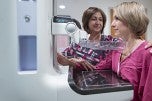
Screening mammograms aren’t something anyone looks forward to. But they are important and can detect breast cancer that can’t be felt during self-exams. The temporary discomfort you feel during a mammogram is more than worth it because it could – literally – save your life.
The Breast Health Services team at Lehigh Valley Health Network (LVHN), part of Jefferson Health, performed more than 150,000 screening and diagnostic mammograms and breast ultrasounds last year. Our team members are experts, and if needed, will connect you to our world-class breast cancer specialists for continued evaluation or treatment.
You can schedule your annual screening mammogram conveniently through MyLVHN after logging in to your account. To do so:
Select "Screening Mammogram" from the list of options and complete the questions to schedule your appointment
Make sure to attend the Breast Cancer Awareness Month events in our community.
Oct. 1: Pink Light Walk for survivors and families, ESU, East Stroudsburg, Pa.
Oct. 3: Women’s 5K Classic raises money for patients, Little Lehigh Parkway, Allentown, Pa.
Oct. 3: Pink Ribbon Ride, for riders, walkers, and dogs, Bucks County Horse Park, Revere, Pa.
Oct. 5: Facebook Live event with LVHN breast cancer surgeon and a cancer survivor
Oct. 8: Pink Out at the Promenade, Center Valley, Pa.
Nov. 10: Breast Cancer Symposium, Thomas Jefferson University, Philadelphia