Image



Don’t miss your first one
Overall, we’re doing a great job at fighting breast cancer in the United States. There’s been a big drop in the breast cancer death rate since 1989. We have advances in early detection and improved treatments to thank.
However, a new study reveals a disturbing factor that contributes to breast cancer deaths. That is, women who miss their first breast cancer screening have a 40 percent higher risk for dying from the disease. Experts note that the higher death rate among those not making it to their first appointment “reflects delayed detection rather than an increased incidence of the disease.”
Surgical oncologist Lori Alfonse, DO, Deputy Physician in Chief with Lehigh Valley Topper Cancer Institute, points out that we’ve known for many years that early detection is the key. She explains how starting mammograms at the recommended age of 40 and continuing them also sets up a precedent to a long life.
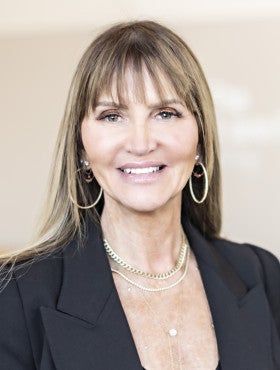
“If every person begins mammograms at age 40 and continues to be diligent, our cancer incidence might increase but the mortality from breast cancer would likely go down. Because anyone with cancer during that time would get diagnosed and treated,” she says. “We would save more lives.”
She adds that in 2024 alone, 42,250 women died from breast cancer. “If those women could all have applied our screening rules at age 40 and continued to get follow-ups, we could have reduced the number of deaths by 3,000 to 5,000 in that one year,” she says.
There are several reasons why people might miss or skip their first mammogram.
Some people may not have insurance that covers this aspect of health care. They might become frightened by the prospect of false positive results and are skittish about initiating the process. For others, it’s cultural. They are comfortable with the belief that “ignorance is bliss,” which we know with breast cancer, is just not the case. Then there is still a stigma about mammograms being painful.
“I often bring up the subject of eyebrow plucking,” Dr. Alfonse says. “Women get plucked, have cosmetic surgery or injections – they all hurt but they’re willing to do it. And these are things that don’t save their lives.
“With some pathologies, people will die for reasons other than not finding cancer early. However, the vast majority of breast cancer is the ‘garden variety’ – hormone receptor-positive (HR+) breast cancer. These are the patients we could be saving,” she says.
As far as the other end of mammogram guidelines, the U.S. Preventive Services Task Force established that women only need mammograms until age 74. Dr. Alfonse disagrees.
“Even if a woman is 92 and has a hormone-receptor-positive mass, we can give her a tablet to control and regress her cancer,” Dr. Alfonse says. “The cancer feeds off the estrogen and progesterone. So, if we block those hormones, it can keep the cancer from growing, and she can continue to live her life.”
Therefore, Dr. Alfonse recommends mammograms even beyond age 75.
When women ask Dr. Alfonse when they can stop having mammograms, she tells them, “When there is no mam to gram.” In other words, only in the event a woman has had a mastectomy and her breasts are removed, is it OK to stop. Another reason would be if the patient is too ill with cancer or another chronic disease.
Otherwise, it’s best to make mammograms a lifelong habit.