Image



Thanks to quick action, expert care and determination, Emily is back to doing what she loves

At 29, Emily Evans was an experienced ultramarathon runner who spent her free time tackling mountain trails, logging long runs and chasing podium finishes. She ate well, stayed active and had no reason to think her heart was in danger.
Then, one afternoon in March 2023, everything changed.
While working from home, Emily suddenly felt intense pressure in her head, followed by what she describes as a lightning bolt of pain that shot from her left ear through her chest and down her arm. Her co-workers urged her to go to the emergency department.
Tests confirmed she experienced a mild heart attack. What followed was an unexpected diagnosis and a surgery that likely saved her life.
Long before she became an ultramarathoner, running was Emily’s happy place. “There’s a feeling when you have one of those magical runs,” Emily says. “Everything slows down. Your thoughts slow down. You feel like you’re flying.”
The running community also became a source of support. “It’s such a positive and encouraging environment,” she says. “Unlike other sports where you’re competing against each other, everybody just wants to see each other succeed.”
Over the years, Emily progressed from local races to ultramarathons, earning podium finishes in several endurance events lasting 10 to 12 hours. Running became part of her identity.
After her heart attack, emergency physicians believed the event may have been isolated. But Emily‘s primary care clinician, Radhika Chandramouli, MD, with Lehigh Valley Health Network, part of Jefferson Health, wasn‘t convinced.

“Dr. Chandramouli listened to me,” Emily says. “I’m so grateful she didn‘t dismiss me.”
Additional testing revealed an ascending aortic aneurysm, a weakened, enlarged section of the aorta, the major blood vessel that carries blood from the heart to the rest of the body. Unlike many medical conditions, aneurysms often don‘t cause symptoms until they become dangerous.
If an aneurysm goes undetected and continues to enlarge, it can tear, a medical emergency known as an aortic dissection.
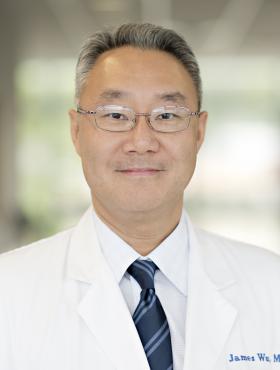
Cardiothoracic surgeon James Wu, MD, with Lehigh Valley Heart and Vascular Institute, says Emily's case was especially unusual. “When patients develop aneurysms at such a young age, there's often an underlying genetic condition or structural heart problem,” he says. Emily had neither. The heart attack itself wasn't caused by the aneurysm, Dr. Wu says, but it ultimately led doctors to discover it before something more serious happened.
At first, surgery wasn't necessary. Emily's care team closely monitored the aneurysm with regular imaging while carefully controlling her blood pressure. Then, Emily became pregnant with her second daughter.
Pregnancy placed her in a high-risk category because the cardiovascular system works much harder while expecting a baby. “When you're pregnant, your cardiac output is higher, and blood pressure can be unpredictable,” Dr. Wu says.
Fortunately, Emily's pregnancy went smoothly. She continued exercising under the supervision of her care team and safely welcomed her daughter.
But in the months after delivery, follow-up scans showed the aneurysm had grown. “I went into the appointment excited because I thought it had gotten smaller,” Emily says. “Then Dr. Wu said, ‘You need surgery.’” Without surgery, the growing aneurysm placed her at increasing risk for a potentially life-threatening aortic dissection.
Emily's operation would replace the enlarged portion of her ascending aorta along with part of the aortic arch. Although it's a complex open-heart procedure, Dr. Wu says it's one his team performs regularly.
For Emily, the biggest concern wasn't the operation itself – it was her family. She had a toddler at home. She was still breastfeeding. The night before surgery, she recorded bedtime prayers and songs for her daughters so they could hear her voice while she recovered.
“My biggest concern was being here for my girls,” she says.
The surgery was successful, and Emily spent nearly a week in the hospital before beginning recovery at home.
For someone used to running ultramarathons, recovery required a different kind of endurance. Emily couldn't lift her toddler while her breastbone healed. She began daily walks, home nursing visits and eventually cardiac rehabilitation.
She was eager to push herself, but her care team wasn't. “Right after surgery, she was asking, ‘When can I run? What can I lift?’” Dr. Wu says with a laugh. Most patients can gradually return to more strenuous exercise after about three months, he says, but rebuilding strength and endurance takes patience.
Emily admits patience wasn't always her strength. “I wanted to run,” she says. “They kept saying, ‘You're going to walk today.’ And I'd say, ‘I want to run.’” Even simple moments at home were challenging. “The hardest thing wasn't not running,” she says. “It was not being able to pick up my toddler because she didn't understand.”
Earlier this summer, Emily pinned on a race bib again. It wasn't an ultramarathon – it was a 5K. With a longtime running friend pacing beside her and her family cheering her on, Emily crossed the finish line just under her goal time.
She's continuing to rebuild her endurance and hopes to return to longer races someday. For now, she's grateful simply to be running again.
The experience has also changed the way she sees everyday life. “It's made me realize how short life is, but also how beautiful it is,” she says. “The little things don't matter as much anymore.”
Looking back, Emily hopes her story encourages others – especially young women – to listen to their bodies. Too often, she says, symptoms like chest pain or heart palpitations are dismissed as stress or anxiety. “I just want women to advocate for themselves,” she says.
Dr. Wu agrees that awareness is important. While aneurysms are uncommon and often develop without symptoms, people with high blood pressure or a family history of aneurysms should talk with their primary care clinician about their risk.