Image



Learn about treatment options and lifestyle changes to support your menstrual cycle on The Healthiest You: Episode 51
More than 10 million women are impacted by heavy periods each year, according to the Centers for Disease Control and Prevention (CDC). Some signs that your period is too heavy include:
Whether your “time of the month” has been affecting your regular routine for a while or you recently noticed a change with your cycle, you’ll want to listen to the latest episode of The Healthiest You podcast. In Part Two of our podcast series, we talk about how to manage heavy periods with OB-GYN Cori Shollenberger, MD, with Lehigh Valley Health Network (LVHN), part of Jefferson Health.
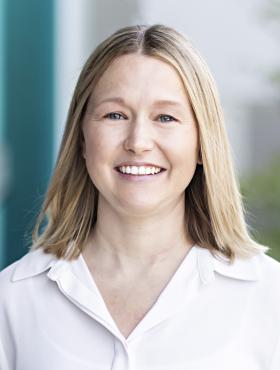
What treatment options can help women feel better and allow them to start experiencing a cycle that is manageable? Are there any lifestyle changes that can help? How can heavy periods impact your overall health? What are some tips for managing a heavy cycle? We answer these questions and more on The Healthiest You podcast this month.
Or download it from one of the platforms below.
Check the “Healthy You” box to get the latest podcast episodes, news, health tips and stories in your inbox weekly.
The Healthiest You podcast is hosted by Amanda Newman with LVHN. In each episode, she interviews clinicians and experts across LVHN to learn practical health tips for everyday life – to empower you to be the healthiest you. While you’re balancing all the responsibilities – work, mom life (kids, dogs, cats and chickens included), family, friends and the never-ending to-do list – you deserve to take a moment of time to focus on your health.
The Healthiest You is available on the podcast apps below. Just search “The Healthiest You” and hit subscribe, so you never miss an episode.
Amanda Newman (00:00):
Welcome back to The Healthiest You Podcast. In part one of our series, we talked about heavy periods and their connection to iron deficiency and bleeding disorders. Today we're going to talk about how to manage heavy periods with treatment and lifestyle changes with OB-GYN Dr. Cori Shollenberger. Welcome to the show, Dr. Shollenberger.
Cori Shollenberger, MD (00:21):
Thank you so much for having me. I'm excited to be here.
Amanda Newman (00:25):
Living with heavy periods is exhausting and can feel isolating. What can cause heavy periods in women and what testing might you recommend?
Cori Shollenberger, MD (00:35):
Yeah, so there's a lot of reasons we can have heavy periods, and we're really looking at the patient's whole medical history, their family history and their specific set of symptoms when we're trying to figure out why they may have a new onset of heavy periods. Some of the first things that we think about are structural changes in the uterus. And so that can be something like a polyp inside the uterus or a fibroid, which is really just a benign growth of the muscle of the uterus. These are benign causes of heavy bleeding, but something that we would definitely want to know about. Other things that we think about can be bleeding disorders. If a woman is on a blood thinner that can increase their chance of having heavy periods. Some of the more common things we see are ovulatory disorders. So that can be something like polycystic ovarian syndrome; it's one of the most common ones we hear about.
(01:35):
But then there's other ovulation changes, I guess, not necessarily a disorder, but things like perimenopause can cause a change in periods and heavier periods. And on the other end of the spectrum, when a woman is first getting her period in adolescence, we can see really heavy periods and you're not necessarily ovulating every cycle, and that can cause a change in periods.
Amanda Newman (02:00):
And those really heavy cycles can just drastically impact how you're feeling on a day to day and can really impact you from adolescence into adulthood.
Cori Shollenberger, MD (02:09):
Yes, absolutely. Absolutely. And so we're taking the whole picture into account when we're trying to figure out what's going on and what tests we're going to order. So if somebody comes to me with heavy periods, I'm usually at least ordering some blood work. So we're usually looking at their blood counts, we're checking their thyroid levels and then getting an ultrasound to look for some of those structural abnormalities. But depending on their risk factors and the other parts of their history, we may order some different tests. We definitely want to make sure that they're up to date on their Pap smear, and potentially an endometrial biopsy if we're concerned that it may be because of precancerous or cancerous changes.
Amanda Newman (02:53):
So what treatment options can help women feel better and allow them to start experiencing a cycle that is manageable?
Cori Shollenberger, MD (03:01):
Yeah. So there's two buckets that I really put our treatment changes into. One is the medical treatment, so medications that we can use and then surgical treatments. And again, we're looking at really the diagnosis to help direct our treatment, but also the patient's stage in life, what their goals are as far as pregnancies or trying to conceive in the future – and really just what their preferences are for certain medications and treatment options. So in the medication group, we have hormonal medications and then non-hormonal medications. And the hormonal medications are really the mainstay. They tend to work really well. And these are things like a regular birth-control pill that you can take on a daily basis. But there's a lot of different ways that we can give you hormonal treatment. And really depending on your lifestyle and your preferences, we can offer different things. So there's a vaginal ring we can use, there's a patch and then there's the IUDs.
(04:05):
So the intrauterine devices tend to work really well. The non-hormonal medications are things like tranexamic acid, and even just good old ibuprofen works really well to help decrease bleeding. And these are medications that you would take really just when you have your period. So not something that you have to take on a daily basis or use every day, but just when you're having the heavy bleeding. And so those can be really good options for somebody that's trying to conceive and they don't necessarily want to use hormonal medications that can prevent pregnancy, but just take something when they're having the bleeding.
Amanda Newman (04:47):
Are there any lifestyle changes that can help?
Cori Shollenberger, MD (04:50):
Yes, absolutely. So I always empower women to kind of take control of their own health as much as they can. Things like trying to just maintain a healthy lifestyle in general. So eating well, exercising, trying to maintain a healthy weight can be really helpful. Sleeping, getting enough sleep at night, hydrating also can be helpful. There is a lot that's in our control, but certainly there are some things that are outside of our control. So even if you do everything perfectly from a lifestyle standpoint, some of these things are just kind of random or genetic and we may not have control over it. And that's really where we can come in and be helpful.
Amanda Newman (05:33):
So you mentioned there are some surgical treatment options. Could you tell me a bit more about those?
Cori Shollenberger, MD (05:39):
Yeah, absolutely. So surgery, again, really depends on the patient's long-term goals for fertility and their own preferences. But certainly if there is a polyp, we would talk about removing a polyp. That's usually done under anesthesia in the operating room. It's a pretty short, safe procedure that we can do. If there's fibroids, we can remove them sometimes the same way through a hysteroscopy or sometimes through a laparoscopy with small incisions on the belly.
(06:11):
There's something called an endometrial ablation where we burn the lining of the uterus, and that's, again, a pretty quick, minimally invasive procedure that can decrease bleeding. The goal is really to decrease bleeding by about 50 percent. The recovery time is really very minimal. And then really the most definitive treatment for heavy periods is removing the uterus, so a hysterectomy. And that is often done minimally invasively. So small incisions on the abdomen. A lot of patients go home the same day, definitely a longer recovery time. But that is another option that we talk about.
Amanda Newman (06:51):
So really whatever phase of life you are in, there are lots of different options.
Cori Shollenberger, MD (06:56):
Absolutely. There's really a whole spectrum from the medications to different surgical options.
Amanda Newman (07:01):
Something that I would love for you to talk about: the genetic component about heavy periods.
Cori Shollenberger, MD (07:07):
So we have definitely found that fibroids can be genetic and different bleeding disorders can run in families – as well as there are genes that can increase your risk for certain cancers, especially endometrial cancer. And so those are things that you would definitely want to bring up with your clinician at your GYN visit.
Amanda Newman (07:27):
Aside from feeling unwell, how else can heavy periods impact your overall health and why should you not leave this condition untreated?
Cori Shollenberger, MD (07:36):
Yeah. So we will often have women that have been experiencing heavy periods for months to years before they come in and talk to us about what's been going on. And so really over time we tend to see when women are losing so much blood with their periods, they often develop iron deficiency anemia, which can cause fatigue and shortness of breath and really affect us in every aspect of our life. So that's very common, but also the mental toll that it takes on women. So I will often hear women say that they're scared to leave the house because they're scared they're going to bleed through their clothing. Or they're a teacher and they don't have time to go to the bathroom all the time and change their pad or change their tampon. And so these are things that really take a toll over time and can cause women to not want to leave the house and do the things that they enjoy or be anxious at their job.
(08:33):
And so we really want to treat this. It tends to be a very treatable condition if we know about it so that women can go back to living their normal lives.
Amanda Newman (08:44):
Because it can really impact everything – your day-to-day – and it can lead to kids staying home from school even. Or even that fear of like, "Oh my goodness, am I going to leak through?" And I know something, too, that's common is doubling up on products too. And that's not a good sign either. There is a sign there that something may be off.
Cori Shollenberger, MD (09:07):
Yes, absolutely. I would say if you feel like you have to double up on products – and our general rule of thumb is if you're bleeding through two pads in an hour – you should definitely be giving us a call and letting us know what's going on.
Amanda Newman (09:21):
And whether our listeners are in school or work, what are some tips for managing a heavy cycle?
Cori Shollenberger, MD (09:28):
Yeah. So first and foremost, I would say you should establish with an OB-GYN that you trust. Definitely if you're having problems, we want to hear from you. But, in general, we should be seeing you at least once a year for an annual checkup. And it's really important to have that relationship with your clinician so that if you're having problems in the future, you can reach out to them. So that's very important. But then, in general, I think being prepared is always a good idea. So there's a lot of apps that you can download to help track your cycle. And so if you know when it's coming, if you have a predictable cycle – not everyone does – but if you have a more predictable cycle and you know when it's coming, then you can really be prepared for it. And so if you're somebody that taking ibuprofen helps with your cycle, then I usually recommend taking that about 24 hours before you know your cycle's going to begin.
(10:23):
And then having a bag packed. If you feel like you might need a change of clothes, bring that with you. Put it in your car, keep one at work. A heating pad can be really helpful on the go. And then all those kind of lifestyle changes, making sure you're sleeping enough, hydrating, eating well, exercising around your cycle can be really, really helpful.
Amanda Newman (10:44):
Those are some excellent tips and things that I actually do myself.
Cori Shollenberger, MD (10:48):
Yes. Great.
Amanda Newman (10:50):
Well, Dr. Shollenberger, thank you so much for joining us today and sharing lots of information on such an important topic that affects so many women of all ages.
Cori Shollenberger, MD (10:59):
Absolutely. Thanks for having me.
Amanda Newman (11:02):
To learn more health tips, visit LVHN.org/healthyyou. Remember to leave us a review and subscribe or follow The Healthiest You wherever you get your podcasts, so you never miss an episode. And remember, be safe, be smart and be the healthiest you.