Image



After years of pain, she found hope at Lehigh Valley Topper Cancer Institute

If asked for “words of wisdom,” Sherry Smith, 56, a Whitehall wife and mother of three, would say, “When you don’t feel right, get yourself checked.” Knowing friends who have dealt with cancer and after surviving her own struggle with multiple myeloma – cancer that starts in the infection-fighting white blood cells in the bone marrow – she is wiser now. “There is no textbook definition,” she says. “None of the symptoms are the same for everyone.”
Pain had become very familiar to Sherry, who used to clean houses when her children were younger. It was with her every day for years, but she attributed it to the manual work she had been doing. However, after she got a job in the office of an accounting firm, she still had pain in her back, ribs, and shoulders. It was a cup of coffee that tripped the alarm.
“I was shaking out the coffee grounds after making coffee,” Sherry says. “Suddenly, I had such pain in my chest, I couldn’t breathe.” Sherry went to the emergency department at Lehigh Valley Hospital–Cedar Crest, part of Jefferson Health, where she had X-rays and a computed tomography (CT) scan. The doctors there told her, with great compassion, that – not only did she have nine broken ribs – but she also had numerous cancerous lesions in the areas where she had been feeling pain.
Because multiple myeloma originates in the bone marrow, it disrupts the signals telling bone to break down or build up. This causes bones to become thin and weak and can create lesions (weak spots) and holes in the bone. The weakened bone is more likely to break with minor pressures or fractures, even during normal daily activities – such as disposing of coffee grounds.
Sherry sought help from hematologist oncologists Mohammad Kazemi, MD, and Bradley Lash, MD, Chief, Hematology-Medical Oncology with Lehigh Valley Topper Cancer Institute, part of Sidney Kimmel Comprehensive Cancer Center. Both doctors are with LVH Hematology Oncology–1240 Cedar Crest; Dr. Lash also practices at LVH Hematology Oncology–Pocono. She had several rounds of targeted therapies followed by a stem cell transplant, but her cancer indicators did not respond as hoped. In fact, the cancer came back.

“I developed pain in my right arm and couldn’t move it,” Sherry says. Testing showed the cancer had created lesions on her humerus, the long bone running from her shoulder to her elbow. She ended up having a titanium rod implanted and then had radiation treatments on her arm to stop the cancer cells from growing. Meanwhile, she continued drug treatment for myeloma, but the results were not encouraging.
“When Sherry relapsed after the transplant, CAR-T was the best option,” Dr. Lash says. The CAR-T therapy program, made possible by philanthropic support from Tom and Karin Hall and Joe and Maureen Topper, involves a type of immunotherapy, where T cells are taken from the blood and genetically changed in the lab. Cancer-fighting receptors called chimeric antigen receptors (CARs) are added on their outer surface. Now called CAR T cells, they are returned to the patient’s blood, where they have extra ability to fight the cancer.
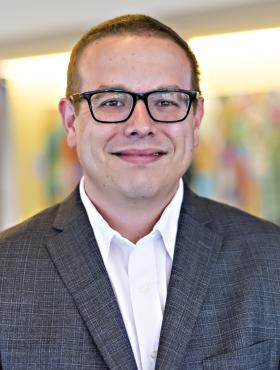
Although Sherry will require lifelong treatment, as of October 2025, she has shown no signs of new cancer since her CAR-T therapy – news she calls “amazing.” She was among the survivors who were honored at the Cancer Institute’s Champions Gala this year. “Fortunately, CAR-T put Sherry in remission, and she has been off all treatment since,” Dr. Kazemi says.
This calls to attention the special expertise and medical advancements that are an intrinsic part of the Cancer Institute. “The landscape of myeloma treatment is changing, faster than any other cancer,” he adds. “Every patient with myeloma should be seen by an expert in myeloma to determine which treatment is best for that patient.”
A person determined not to let her disease win, Sherry continued to work full time throughout her cancer treatment. Outside of work, she enjoys walking for exercise, taking care of things around the house, and spending time with her family: husband Leroy, two sons, their families, and four grandchildren (soon to be five). Her youngest daughter is starting her junior year of high school, so she is helping her prepare.
Essentially, Sherry is back to living her life, with tremendous gratitude to the Cancer Institute. She said she found great comfort in the bonds she forged with the nurses and the entire Lehigh Valley Health Network (LVHN) team. “They were just amazing,” she says. “They would take time to come and talk with me. If I had any problems, they would always explain what was going on. I can’t say enough good things about LVHN.”
In retrospect, Sherry believes her experience was a good lesson for her children and grandchildren. “I try to teach my kids that no matter what comes along, you need to keep going and put a smile on your face,” she says. “I wanted to show them you don’t become a victim.”