Image



Now, your lifetime risk is included on your mammogram report
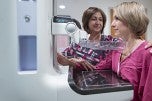
Imagine a way to know what your chances are of developing breast cancer during your lifetime? Wouldn’t a simple percentage based on your personal data that can alert you and guide clinicians be helpful? It’s standard practice for Breast Health Services patients at Lehigh Valley Health Network (LVHN), part of Jefferson Health.
When you have a mammogram at any LVHN Breast Health Services location, the Tyrer-Cuzick scale is used to determine your risk status. This scale is a comprehensive risk assessment tool that puts a percentage score to an individual's 5-year, 10-year, and lifetime probability of developing breast cancer.
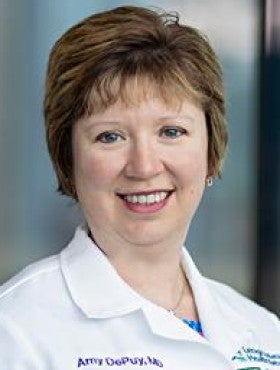
“The score is based on data points such as family history of breast cancer and breast density,” says Amy Depuy, MD, with LVPG Obstetrics and Gynecology–1245 Cedar Crest and LVPG Obstetrics and Gynecology–Trexlertown. “The report is sent to patients through the MyLVHN portal. Women can find the score at the bottom of their report, near the impression.”
These are data points used to make the calculation:
The risk score on LVHN’s mammogram report includes recommendations for further testing based on the percentage. Here are the categories of risk with next steps:
Breast density is incorporated directly into the Tyrer-Cuzick risk calculation. According to Dr. Depuy, it strongly modifies the risk score. That’s why, since 2024, the Food and Drug Administration (FDA) has required mammogram reports include “not dense” or “dense” language.
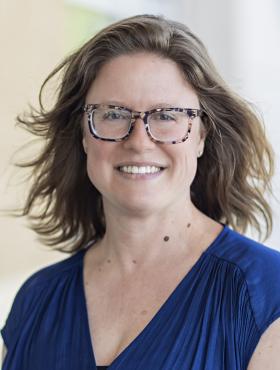
“Because fibrous and glandular tissues are harder to see through on a mammogram, breasts may be ‘dense’ if you have a lot of these tissues,” says Emily Brophy, MD, Chief, Section of Ambulatory Obstetrics and Gynecology, with LVPG Obstetrics and Gynecology–Pond Road and LVPG Obstetrics and Gynecology–Richland Township. “Women with dense breast tissue have a higher risk for breast cancer as it may mask breast cancers.”
Dense breast tissue also makes it harder for radiologists to identify disease. Dense breast tissue looks white on a mammogram, as do breast masses and cancers. Incorporating density into the risk score along with recommendations for high-risk patients give clinicians valuable information, including how to advise patients.
“Prior to this, if a mammogram showed a woman had dense breast tissue, we weren’t sure whether to recommend an automated breast ultrasound (ABUS) or not,” Dr. Brophy says. “Now that major health organizations and the FDA recommend ABUS as an option for women who have heterogeneously dense or extremely dense breast tissue, we can more easily guide women on their next step.”