Image

Jami Marquez, left, holding Keilani, who she was pregnant with during treatment, is surrounded by her family. From left, Chastity Ruppert holding Nya; Ariana; Jami's husband, Ian; and Jax (in front).


Jami Marquez says determined LVHN clinicians saved her life and her family
It was one of those busy days for Jami Marquez, a 39-year-old Schuylkill Haven mother, who was 21 weeks pregnant with her fifth child. She was still nursing her youngest when she discovered a lump in her left breast but thought it was related to breastfeeding. Her good sense sent her to her gynecologist at Lehigh Valley Health Network (LVHN), part of Jefferson Health.
After an exam, her doctor referred her to Breast Health Services, where they conducted “lots of scans.”
Before she knew it, Jami was meeting with another doctor, who showed her the scans, revealing a mass and diseased lymph nodes. From there, she was scheduled for a biopsy and an appointment with hematologist oncologist Savitri Skandan, MD, Associate Chief, Division of Hematology and Medical Oncology, with Lehigh Valley Topper Cancer Institute.
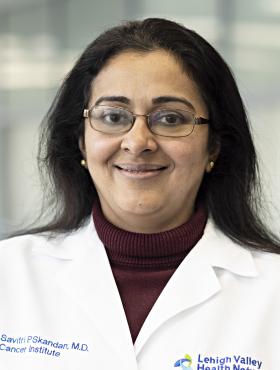
Dr. Skandan explained that Jami had stage 3 triple negative breast cancer, an aggressive type of cancer that tends to grow and spread faster and has fewer treatment options. Within two weeks, Jami had completed genetic and cardiac testing and had a port placed for delivery of chemotherapy.
“Everything moved so quickly,” Jami says. “I’m very thankful that I got in and was seen so fast.”
Science says chemotherapy can be safely given to pregnant women after their first trimester. Even so, the team at the Cancer Institute took full advantage of the multidisciplinary approach, working closely with the experts in maternal fetal medicine to make sure Jami’s treatment proceeded safely.
“We avoid chemotherapy during the first trimester because a critical phase of embryonic development is taking place,” Dr. Skandan says. “We also use chemotherapy agents that don’t cross over to the baby. We worked with maternal fetal medicine for timing and other considerations prior to surgery.”
Surgical oncologist Lori Alfonse, DO, Deputy Physician in Chief with the Cancer Institute, conducted Jami’s lumpectomy. This is where the breast tumor and a small rim of healthy surrounding tissue are removed, leaving the rest of the breast intact. The tumor had shrunk to 4 millimeters, showing a good response to the chemotherapy.
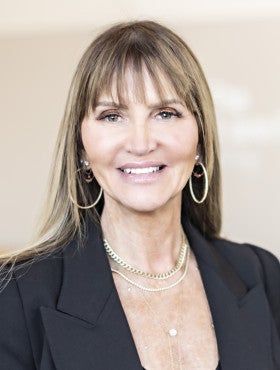
However, after the surgery Jami needed to finish her chemotherapy, which required inducing an early birth of her baby.
Little Keilani was born more than a month before her due date at 5 pounds, 7 ounces and spent nine days in the neonatal intensive care unit. It was a hard time for Jami and her husband, Ian, because the right before her baby was born, Jami had an attack of severe pain that turned out to be a kidney stone. Luckily, the kidney stone broke into pieces and Jami didn’t have to prepare for another surgery.
She continued her chemotherapy, followed by 33 days of radiation, which she finished in September 2022. Treatment with immunotherapy to get Jami’s immune system back in shape was stopped after she developed myocarditis, an inflammation of the heart muscle. It also caused issues with her adrenal and thyroid glands. The conditions were treated with medication.
A final bump in the road came when Jami found out, after spending eight days in the hospital with myocarditis, she caught COVID-19 and it spread throughout her family. Commenting on how she made it through so many challenges, she says, “I have to keep going for my family, and I wasn’t going to let cancer take that away from me.”
She says the community also helped. She specifically thanks Vickie’s Angel Foundation, a nonprofit with a mission of helping families fighting cancer who have difficulties paying their bills during the challenging times of undergoing cancer treatments.
Jami is especially grateful for the expert care she received at LVHN. “Without aggressiveness of treatment my story could be different,” she says. “It’s an open door there. You always get an answer, everyone takes you seriously, and they are so kind.”
Compassion is a distinct hallmark of the Cancer Institute, where in addition, its specialists in surgical and medical oncology are uniquely qualified to handle the complexities of a situation like Jami’s.
“We are passionate people passionately taking care of people where we live,” Dr. Alfonse says. “This is evidence-based care from dedicated ‘super’ specialists who still see the patient as a person and not a disease. We care about the other things that are important in your life.”