Image



As many as eight specialties come together on the liver cancer tumor board
It has become essential for clinicians to work together to develop the best treatment and achieve the best possible patient-care result. Research backs this up. When medical professionals share their expertise, they can provide more holistic and higher-quality patient care.
That’s the idea behind the liver cancer tumor board, one of numerous tumor boards that meet regularly at Lehigh Valley Topper Cancer Institute.
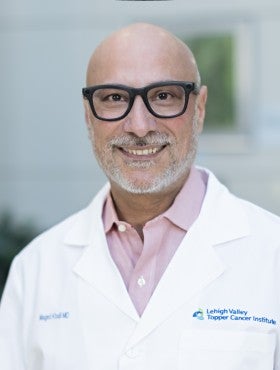
Patients with liver cancer often present complex clinical challenges that require “a highly individualized treatment approach,” says hematologist oncologist Maged Khalil, MD. “Our collaborative model ensures patients are offered all viable options and that therapies are integrated seamlessly for best outcomes.”
The Cancer Institute’s liver cancer tumor board brings together – in person – a diverse yet related team to consult on diagnosis, staging and therapeutic decision-making. Experienced staff specialists from eight areas discuss cases and, together with patients, decide on the best plan for liver cancer treatment.
The board includes:
The liver cancer tumor board facilitates communication among specialists, enabling efficient coordination of diagnostic workup, referrals, clinical trials and scheduling of therapies. The clinicians aim for a collaborative, consistent approach to liver cancer treatment, where each one weighs in based on their knowledge and experience, and contributes to a multidisciplinary solution.
“The tumor board is a mechanism for all the experts to meet, discuss complex patients and problems, and formulate the best consensus plans for each patient, keeping in mind the data and evidence,” says Lee Ocuin, MD, surgical oncologist with Lehigh Valley Topper Cancer Institute.
It can also add to the comfort and convenience for patients in the long run.
“Tumor board collaboration improves the patient experience by reducing delays and duplication of services,” says radiation oncologist Alyson McIntosh, MD. Dr. McIntosh explains that the liver cancer tumor board comes together for every patient facing a liver cancer diagnosis.

“Our board discusses the condition of each patient and makes individual patient recommendations from a range of available treatments, including resection, liver-directed catheter treatments, radiation, liver transplantation, HAIP therapy, histotripsy and systemic therapies,” says surgical oncologist Aaron Blackham, MD. He notes that patients benefit highly from the advanced expertise of Drs. Khalil, McIntosh and Ocuin, as well as key contributing members George Rofaiel, MD, Chief, Section of Transplantation Surgery, and Errin Hoffman, MD, Chief, Section of Cardiovascular and Interventional Radiology.
Beyond the immediate advantages for the patient, there are long-term benefits as well.
“The tumor board also serves as a valuable forum for ongoing education, protocol development and clinical trial enrollment,” Dr. Khalil says. “It enhances our institution’s ability to track outcomes, identify care gaps and promote quality improvement initiatives.”