Image



She’s recovering after Whipple, hormone therapy and partial liver resection


Always busy, Julie Chang, 48, has lots going on in and outside of work. She’s a wife, mother of three, a nurse practitioner at Children’s Hospital of Philadelphia – plus she breeds horses, does showjumping and teaches riding at her farm in Lambertville, N.J. It’s no wonder, when she felt exhausted and noticed a pain in her ribs, she attributed it to too much to do and a fall from a horse.
She is forever grateful to her family doctor who listened to her initial concerns and ordered lab tests to see what was going on.
Because Chang had experienced some abnormal bleeding and pelvic pain, her family doctor referred her to M. Bijoy Thomas, MD, Chief, Division of Gynecologic Oncology with Lehigh Valley Topper Cancer Institute. He recommended a computed tomography (CT) scan and was surprised when the test results came in. “It showed a mass in her pancreas,” Dr. Thomas says.

Chang remembers telling the nurse she must have mixed up her scans with someone else’s, because they showed a patient “riddled with cancer.” But the scans were hers. Her diagnosis was neuroendocrine cancer (of the pancreas) that metastasized to her liver.
Devastated, Chang froze in the parking lot until her husband, a surgeon, arrived to help. Both medically knowledgeable, the couple put their faith in Lehigh Valley Health Network (LVHN), part of Jefferson Health, to begin the process of recovery.
“We had four other opinions, and LVHN was the most aggressive and comprehensive,” Chang says. “My LVHN clinicians told me what other health systems proposed would not have gotten me back to full function – and they couldn’t see me living the rest of my life like that.”
Chang’s care team started with her pancreas, which was the primary location of the cancer.
Surgical oncologist Jeffrey Brodsky, MD, with the Cancer Institute, conducted an open Whipple procedure, often the only treatment that can lead to long-term survival and cure. It involves taking out the head of the pancreas, gall bladder, first part of the small intestine and end of the bile duct to remove the cancer and prevent it from spreading to other organs.
When Chang was feeling better after a “rough” two-month recovery, her team assembled LVHN’s multidisciplinary tumor board, bringing all LVHN’s cancer expertise to the table to tackle her remaining tumors.
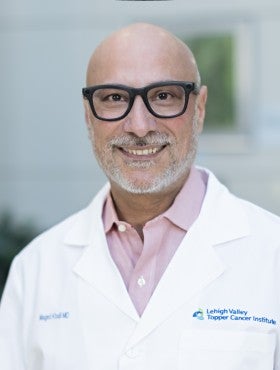
“This case underscores the power of a truly multidisciplinary approach in modern cancer care,” says hematologist oncologist Maged Khalil, MD, Associate Director of Research with the Cancer Institute. “Neuroendocrine tumors of the pancreas (like Julie’s) are complex and require coordinated expertise across surgery, medical oncology, interventional radiology, pathology, imaging, genetics and specialized nursing teams.”
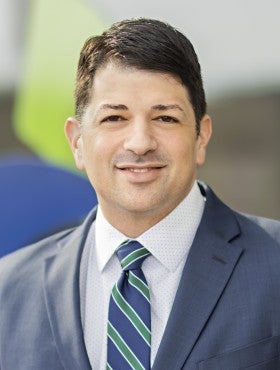
The board decided surgery was the best option. Surgical oncologist Lee Ocuin, MD, with the Cancer Institute, knew it would be a challenge. “The tumors were on both sides of her liver,” he says. “The left-side tumors were on the periphery, so we were able to do small resections there. But we had to remove the entire right side because there were so many.”
To compensate, the remaining side of the liver will grow larger. Because the body only needs about 30% of the liver to function, Chang was back to better health after 10 long months of treatment. “Today, Julie has no evidence of disease and continues on medical therapy with close surveillance,” Dr. Khalil says.
Dr. Ocuin points out that most surgeons wouldn’t feel comfortable managing extensive disease like Chang’s in the aggressive way the team did, adding that LVHN has put much effort into building a program with a high level of expertise. “When patients consult with only nonsurgical clinicians, the full set of options just won’t come up,” he says.
Feeling “better than she expected,” Chang has made a full recovery, is back to work and will be back in the saddle very soon. More than thankful for the care she received, she says her experience put things in perspective for her whole family. What seemed important a year ago is now trivial considering she was able to beat nearly impossible odds.
“All the clinicians worked together so well,” Chang says. “From beginning to end, I never felt alone or didn’t know what was going to happen. If I had a question, people always got back to me, and they always had an answer.”
“Julie’s journey is a reminder that when specialists unite around a thoughtful, individualized treatment strategy, we can offer patients not only advanced therapies but hope and long-term survival,” Dr. Khalil says. “This success belongs to the team — and to the patient’s courage and perseverance.”