Image



Her own doctor says, ‘Three years out is incredible for this deadly disease.’


Berks County resident Darlene (Dolly) Sills is counting her blessings. Her experience as an oncology nurse helped her get to the right place after a delayed diagnosis left her with stage 3 pancreatic cancer. It was turning to the team at Lehigh Valley Topper Cancer Institute, part of Sidney Kimmel Comprehensive Cancer Center and Jefferson Health, and the clinical trial that Suresh Nair, MD, the Cancer Institute’s Physician in Chief, brought to the Lehigh Valley, that added a new chapter to Dolly’s life.

Unlike other cancer centers and hospitals in the region, the Cancer Institute distinguishes itself by the intensive research and innovative treatments championed by its experienced oncologic staff. Its clinicians are experts in creating personalized treatment plans that address a patient’s individual disease state. This is made possible by a collaborative team of different specialists who all weigh in to evaluate and develop the best treatment for each patient.
The Cancer Institute is also home to the Peter and Odete Kelly Center for Personalized Cancer Immunotherapy. Focusing on personalized immunotherapy through research, cancer vaccines and its experts’ experience, the center enables access to higher profile clinical trials.
One such trial, begun in 2024, is evaluating an immunotherapeutic pancreatic cancer vaccine. “The vaccine ‘teaches’ the immune system to fight pancreatic cancer recurrence by targeting specific genetic mutations that cause cancer cells to grow,” Dr. Nair says.
Thanks to funding from the Kelly Center, the Cancer Institute became the only compassionate use site in the Northeast, bringing in patients from as far as Michigan and California and those close to home, like Dolly.
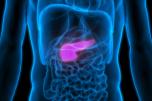
A lifetime vegetarian, Dolly, now 64, was exceptionally healthy when she felt intense pain just under her ribcage in April 2022. Consultation with her local doctors was not fruitful, and proper testing was not done. By the time she demanded magnetic resonance imaging (MRI) tests, six of her lymph nodes tested positive for cancer and a tumor had grown to involve blood vessels and nerves around her pancreas.
“This is the detail that makes her cancer free 34 months out, a miracle,” Dr. Nair says.
Switching her care to Lehigh Valley Health Network, Dolly had surgery, where the cancerous portions of her pancreas and her spleen were removed. This was followed by six months of chemotherapy and 28 sessions of stereotactic radiation therapy.
Because of her positive lymph nodes and “close” margins after surgery, Dolly needed additional treatment. Fortunately, the vaccine trial Dr. Nair and his team brought to the Cancer Institute was taking phase 2 participants.
Three patients at the Cancer Institute who took part in the trial – including Dolly – were randomly chosen to take the vaccine. In the first round, Darlene had 24 shots, one in each arm and each leg, for six weeks, then a booster session of 16 shots. She finished treatment in July 2024.
Now “under surveillance” until fall 2027, Dolly has scans of her chest, abdomen and pelvis every three months and blood tests to check her cancer markers. Her latest scan in June 2026 showed no evidence of disease.
“I am doing wonderfully now,” she says, adding her appreciation for her cancer team. “From start to finish, it was a perfect process.” Her own doctors are in awe.
“Three years out is highly unusual for pancreatic cancer. There’s maybe a 10% chance of this happening,” Dr. Nair says. He and the team believe their approach to care was a key factor in her recovery. “Very few places have such a personalized, unified approach. We have multiple oncologists, along with clinical trial nurses, social workers and counselors – a whole team supporting Dolly’s journey.”
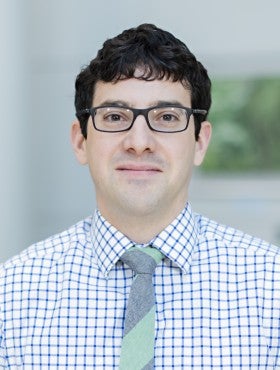
“It wasn’t any one thing,” agrees hematologist oncologist Roberto Fratamico, MD, with the Cancer Institute. “Combining experts and treatments is invaluable, even more so with pancreatic cancer. Trials are part of this. Clinical trials are the only way to make progress with pancreatic cancer because in 80% of cases, the cancer comes back.
“Beyond that, Dolly is a beacon of positivity,” Dr. Fratamico adds. “Everything with her returns to her positivity, composure, and hope. That and her faith are what have gotten her to this point along with the impactful interventions.”