Image



Extraordinary healthcare professionals’ carried her through her darkest moments


A woman full of life, Tiffney Lane works as a quality-of-life director, is a wife, mother of three “amazing” children, and is now a breast cancer survivor with an inspiring story to tell. She says that while hearing the word “cancer” initially filled her with fear, she kept her focus on the “right now.” She trusted her doctors and put her faith in God, believing whatever it was, she’d get through it. “I had no other choice but to persevere,” she says. “And I had the best doctors.”
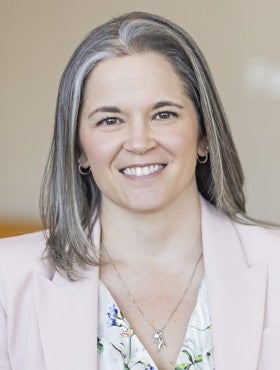
Tiffney was visiting a friend in Texas in 2022 when she first had some telltale symptoms of breast cancer. When she got home, she saw her OB-GYN, who ordered a magnetic resonance imaging (MRI) test. From there, she had a biopsy, which revealed ductal carcinoma in situ (DCIS), a noninvasive, stage 0 breast cancer fueled by hormones. She was referred to surgical oncologist Krista Bott, MD, with Lehigh Valley Topper Cancer Institute, part of Jefferson Health.
Tiffney’s case went to the tumor board, a group of doctors from multiple specialties, and was discussed with Tiffney at the multidisciplinary clinic. This is where breast surgery, radiation oncology, and medical oncology all meet with the patient to discuss the most effective plan.
The recommendation was surgery first, followed by treatments to reduce the risk for recurrence afterward. Chemotherapy is not needed for DCIS because of the absence of invasive cancer.
“DCIS is breast cancer that grows in the milk ducts,” Dr. Bott says. “Sometimes, it can extend ‘down the tube’ of the milk duct and involve a wider area in the breast. Tiffney had a component of this, complicated by involvement of the ducts going into her nipple. Therefore, her surgery required her nipple to be removed to get those ducts out.”
Dr. Bott says Tiffney had the option of a kind of lumpectomy where the nipple and areola are removed, or a mastectomy (removal of the entire breast). Both options offer equivalent survival rates and are equal as far as treating cancer.
“The cancer was in my left breast. Dr. Bott gave me the facts and let me know there were no guarantees about cancer occurring in the right,” Tiffney says, noting there was no genetic aspect, and she did not have dense breast tissue. “She let me make the decision myself and gave me the time to do it.”
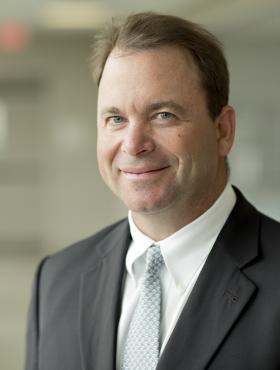
Tiffney ultimately chose to have a mastectomy with reconstruction. She consulted Randolph Wojcik, MD, Chief, Division of Plastic Surgery, Lehigh Valley Institute for Surgical Excellence, part of Jefferson Health. During the initial consultation, the team reviews all reconstruction choices, weighs the pros and cons, and selects what’s best for that patient.
Considering all surgery carries risks, including the possible need for additional surgery, Tiffney had to undergo several procedures to achieve a good reconstructive solution. She successfully received gel implants in October 2025.
Today, Tiffney is “doing great, cancer-free,” Dr. Bott says. “We will continue to watch her, but she is at a very low risk for recurrence.”
Dr. Wojcik emphasizes that there’s more to cancer than physical recovery. “After 20-plus years, I’ve found addressing the mental side of the disease – along with strong support and positivity – leads to better outcomes stage to stage,” he says. This rang true for Tiffney.
Throughout her experience, she never lost consideration for her family. Even as she faced her first surgery on Dec. 20, 2022, she made sure her family would be able to celebrate the holidays. She prepared her usual six Christmas trees and got matching pajamas for everyone ahead of time. She was also very sensitive to their reaction to her illness.
“We focus on the patient, but children just sort of come along on the journey,” she says. “They’re scared, but there’s no space for them to express their feelings.” This acknowledgement caused Tiffney to create a workbook with pages for journaling, so families can work through their feelings. This dedication to family and her own emotional health aided Tiffney’s healing process.
“When I was going through this, I started setting a 12:30 p.m. grateful alarm every day,” she says. “I would force myself to find something to be grateful about. I prayed to God, saying, ‘I don’t want this.’ But the alarm, which I still set today, helped me find some joy.”
Tiffney says her recovery – both physical and emotional – was guided by her excellent care and a simple question: “Life is not always going be the way you like, but what are you going to do with it?”